About to graduate from Sarah Lawrence College, I was determined to become a documentary filmmaker. Albert and David Maysles — the legends of New York cinema vérité — juried my thesis, and to my amazement, offered me a job as a film editor in their company. At the same time, I’d been accepted into the Peace Corps and assigned to Tunisia, where the government was starting a television station. I stood at a crossroads: join the Maysles Brothers in New York, or head to North Africa with a dream of making documentary films.
I turned for advice to Academy Award–winning cinematographer Erica Anderson. She didn’t hesitate. She told me: “Find your own voice. Follow your passion. Join the Peace Corps and make your own films.” I listened.
At MIT, Stanley completed his architectural thesis on housing in developing countries. His classmate, Roger Lewis, convinced him to forgo the Italian Thesis Prize in Rome and join him in Peace Corps Tunisia, where Stanley could put his ideas to work.
I headed for Peace Corps training at Princeton University and learned that my assignment would be teaching English as a Second Language at the Bourguiba School in Tunis, not a developing TV station. I must admit, I enjoyed teaching. My students were wonderful, but secretly I was frustrated. This was a far cry from my dream of making films. Meanwhile, an equally frustrated Stanley was designing hotels for tourists at the Tunisian Bureau of Tourism. The money generated from hotels and tourism, they assured him, could then build low-cost housing.
Two frustrated Peace Corps Volunteers met in this exotic country. I really had no desire to meet the love of my life during my two years in the Peace Corps. I planned to avoid any love entanglement but along came Stanley. What can I say? He was different and slowly we became very attached.
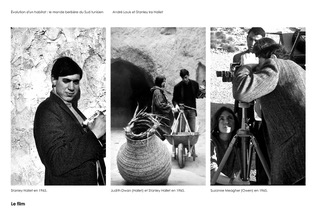
Stanley knew I longed to make films and suggested, “Why don’t we make a documentary on the Berbers (Amazigh) in Southern Tunisia where they carve houses into mountainsides or dig underground homes in the valleys? You can direct and run sound while I study their architecture and be your cameraman.” I liked both Stanley and his idea.
I brought the idea of this summer project to our Peace Corps director, Richard Graham, an amazing man, a diplomat and dream-enabler. He knew my passion for filmmaking and did something extraordinary. He not only agreed to supply the 16-mm film, but he also advanced part of my end-of-service going-home allowance to send Stanley to Switzerland to pick up the latest Bolex camera with a zoom lens and tape recorder.
Filming requires permission, and we needed someone the Berbers trusted. That person was Père André Louis, a priest (Père Blanc), anthropologist, and professor at the Sorbonne who had studied the Berber culture for years and hosted a weekly radio program about traditional village life. When we met him deep in the Tunis medina at L’Institut des Belles Lettres Arabes, he listened carefully, then smiled and said: “I will help, but only if I can come with you.”
Our small crew grew to include a Catholic priest, my Peace Corps roommate, Suzanne Meagher (Owen), and her Tunisian boyfriend, Moncef Meddeb. With Père Louis as our guide, we set out across the desert and into the mountains.
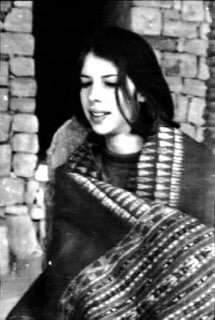
The Berbers — Amazigh — welcomed us warmly. They trusted Père Louis. He’d spent years learning their language, sleeping in their homes, and honoring their customs. They were honored and flattered by our interest in their culture and way of life. Père Louis introduced us to a young woman in traditional Berber dress leaving a deep troglodyte cave. She was one of his graduate students, home for the summer. Thanks to President Bourguiba, education was open to all women even those in mountain villages.
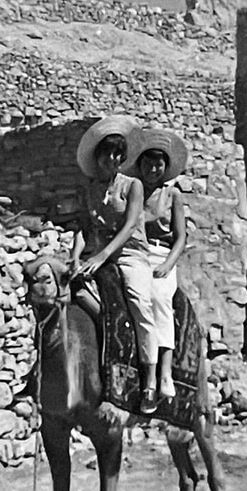
Villagers and nomads living in tents felt at ease with Suzanne and me. They had never been up close to Western women. Examining our Western outfits with delight, they dressed us in their embroidered clothes and silver jewelry. Père Louis was finally able to take pictures of us in the Berber clothes, safely avoiding any offense. I purchased a lovely headscarf and a beautiful embroidered traditional jebba, a robe worn by judges in Southern Tunisia.
Stanley and Père Louis spent hours discussing why these mountain dwellers had moved from their mountaintop fortresses to underground homes. They concluded that once the ancient conflicts between Arabs and Berbers ended, the Berbers felt safe enough to descend into the valleys below. Literally, peace had brought them down to earth.
Our filming days were long and hot, but problem after problem was solved. The desert light dazzled, the hospitality was humbling. Finally, our first batch of film was shipped to the United States for processing. Months later, we learned that the reels had been sent by mistake to Indonesia — and lost forever. We were heartbroken. I was very upset when I told Richard Graham, but he smiled and immediately stood up and hugged me. “Look at all the friends you’ve made,” he said. “Now go back and shoot it again.” And we did.
Those days among the Berbers shaped how Stanley and I would see the world—and each other.
Part Two: The Circle Completed
Stanley and Judy Dwan Hallet
1966 to Today
Following two incredible years in Tunisia, I was back in graduate school at MIT. As a student and teaching assistant, I furthered the lessons learned in the mountains of Southern Tunisia. Judy was in graduate school at UCLA, a good 3,000 miles away. After three months apart, it soon became clear that something was amiss. A friend at UCLA called. He warned that with 100 men to three women making films, if I wanted to see Judy again, I had better get out there fast. I took out an MIT Student Defense Loan and was on the next flight to Los Angeles. I literally swept in and asked Judy to marry me. Much to the consternation of her family, she accepted. I promised to support her further studies in film, and we returned to Boston.
After completing my master’s in architecture, I accepted a teaching position at the University of Utah, Judy completed courses at the UCLA Film School and made a French-language teaching film for her master’s degree at the University of Utah. We began making short experimental films.
Those Peace Corps lessons — resourcefulness, trust, curiosity — guided us and paved the way for my Fulbright to Afghanistan. On our way to Afghanistan, we bought the latest Eclair 16-mm camera in Paris and a Nagra Tape recorder in Switzerland. This reminded us of the trip I once made as a Peace Corps volunteer to purchase a Bolex camera.
In Afghanistan, I taught and helped build the fledgling Department of Architecture at the University of Kabul. I also wrote a book on the vernacular architecture of the country with my Afghan colleague Rafi Samizay. Judy and I shot two films; The Painted Truck and The Nomads of Badakshan, now considered cult films amongst the Afghan diasporas.
We returned to Utah and Judy’s dream came true. She joined the documentary unit at the NBC affiliate in Salt Lake City’s as their cinematographer and editor. Her first major assignment was filming the American Indian Movement’s takeover at Wounded Knee in South Dakota. The energy, the risk, the immediacy—it felt like Tunisia. The documentary unit merged into the award-winning news magazine show, EXTRA. Over the next 7 years, Judy was a producer/reporter and directed more than 100 short documentaries.
My friend Roger Lewis, a practicing architect and professor of architecture, nominated me to head the Architecture Department at The Catholic University of America. Much to my surprise, they hired me.
I transformed the Architecture Department into a School of Architecture and became their first dean, Judy joined National Geographic Television as Senior Producer for their news magazine show, Explorer. She produced and directed the first hour-long profile on Jane Goodall, as well as documentaries on the gauchos of Argentina and gold mining in Venezuela, winning many awards.
Judy formed her own company and the subjects grew: Pope John Paul II, Moby-Dick, Dr. Jekyll and Mr. Hyde, the return of the buffalo to Native lands, the science of aging, dams, and a documentary on New Guinea about a tribe that lived in tree houses and practiced ritual cannibalism. I built shelves in the house I built in Washington, D.C. to hold her trophies. I retired as dean to begin teaching graduate studios in Paris and Rome, but Tunisia called.
I was invited to give a lecture in Tunisia on my book: Évolution d’un habitat: le monde bèrbere du Sud Tunisian. Long after Père Louis’ death, the book was finally published with his original text, my drawings, and photographs, that we had assembled during my years in the Peace Corps. While in Tunis, the president of the University Tunis Carthage, Khaldoun Ben Taarit, invited me to transform the school’s architectural design curriculum. Excited by this invitation, I developed intensive month-long architectural workshops each semester and invited many of my American colleagues to join me in the teaching process. For the next four years, we reworked the design studios, influencing both students and teachers in the ever-evolving world of design.
In Tunisia, we gathered for meals prepared by the president’s wife, Raoudha, and her cook, Hasna. The food was extraordinary — spiced, fragrant, deeply rooted in memory. When Judy searched for a Tunisian cookbook in English and found none, President Khaldoun Ben Taarit said, “Then you must write one with my wife and Hasna.” Judy did just that, approaching the challenge like a documentary filmmaker. In the kitchen Judy watched her two remarkable colleagues prepare their favorite Tunisian dishes. She photographed, tested, and took notes on every recipe passed down by Raoudha’s mother, grandmother, and mother-in-law. She assembled the final text and photographs, and we laid out the book. Discovering Tunisian Cuisine, co-authored with Raoudha and Hasna, now sits on counters in more than 1,500 American kitchens.
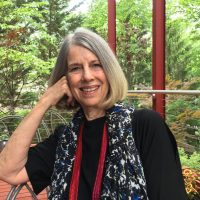
Who knew back in 1964 that Judy would write a Tunisian cookbook for Americans? She felt it was her gift to the country that had given us both so much. If the original concept behind the Peace Corps was exporting American know-how to a developing world, Judy and I are good examples of the contrary. We took home much more than we left behind. The two years in the Peace Corps changed our lives, changed our attitudes toward other people, and made us want to share the rich cultures we experienced with others.
We, like so many returning volunteers, believe that our time in the Peace Corps became a lifelong lens through which we will always view the world.