Chicken bones were left at the cooperative door
John Miller
Brazil 1967-1970
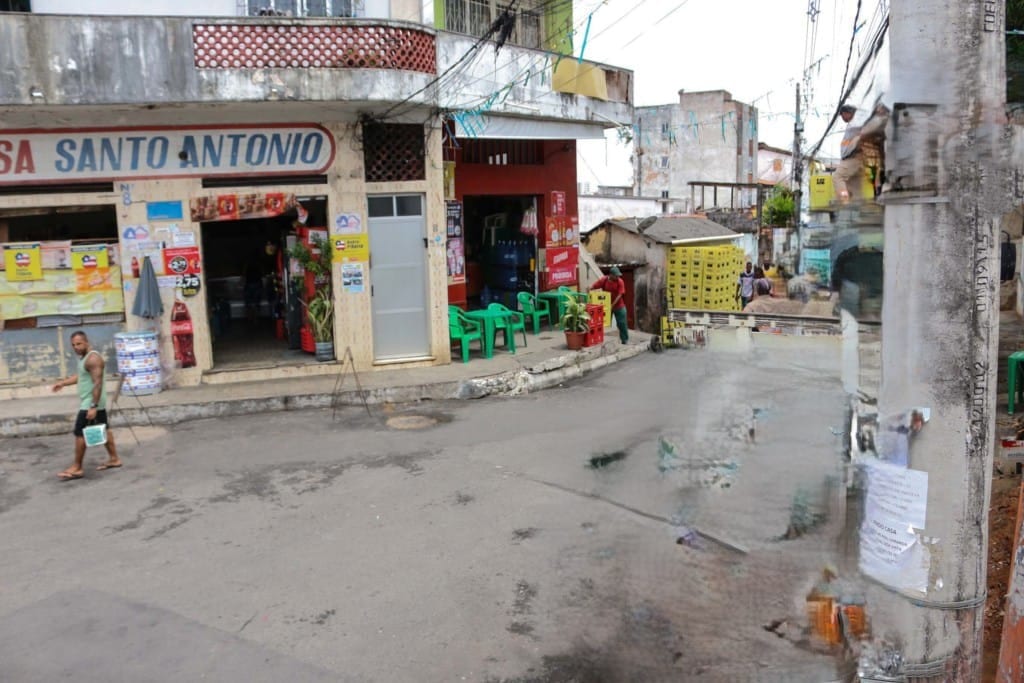
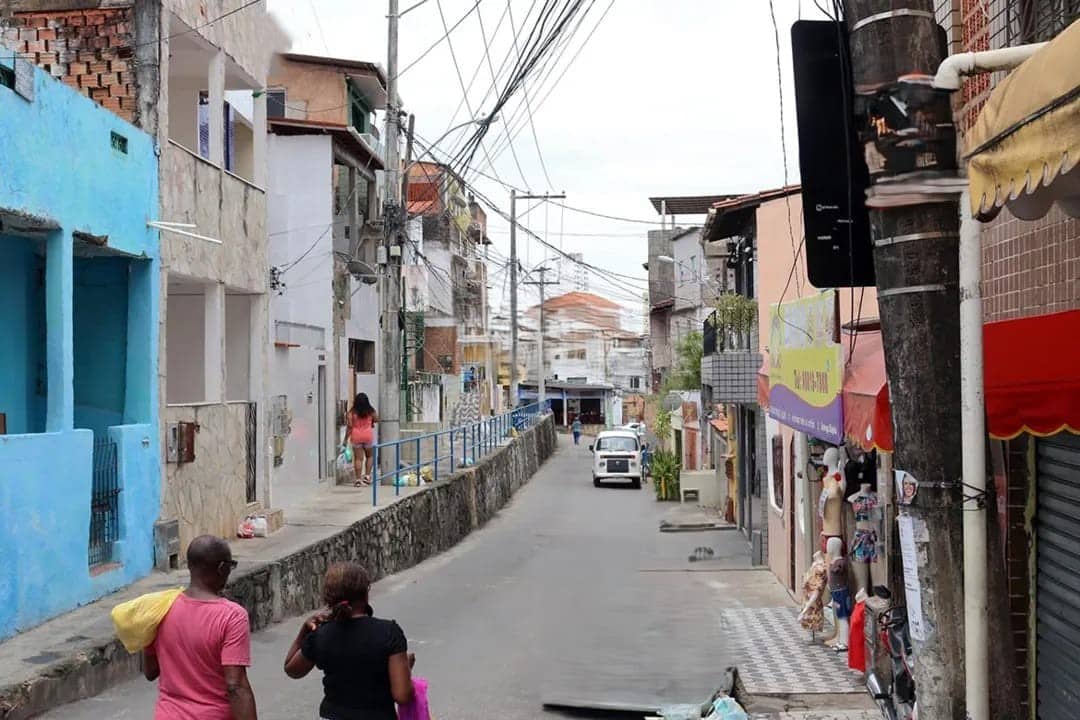
I lived in the bairro (neighborhood) of Engenho Velho de Brotas in Salvador, Bahia, Brazil. The 7,000 working-class families were poor but not the poorest. The main roads were dirt, the paths were narrow. There was a single bakery and a couple of food shops. There was often a line at the only phone booth in the neighborhood. Many residents rode the occasional bus to the center of Salvador for their work or their job search.
My work was essentially doing everything I could to promote and strengthen the local cooperative known as Sociedade Beneficente do Engenho Velho de Brotas. The job required constant engagement with everyone. I enjoyed those daily greetings and interactions. A reciprocated smile would lead to a handshake with the gringo. I would get a glimpse into a life. Some of these marked the beginning of a relationship that led to involvement with the Coop. From the baker I learned not only about breads and pastries, but his life story as well. From my landlady I learned that landlords could live in homes much more humble than my own. I was surely a well-recognized, odd character, but never did I feel unwelcome in any way.
Community Development (CD), if successful, would be long-lasting. The work included identifying and supporting community leaders, facing community problems and finding common solutions – always by encouraging and cajoling people to act. Sure, with a few Cruzeiros it was easy to hire people to dig a trench and lay a pipe, but wouldn’t the sewage system last longer if the residents figured out what was needed, dug the trench, laid the pipes, and maintained it themselves?
I attracted new members to the Coop, ultimately helping them do what they wanted to do – sourcing construction materials at prices they could afford. We had a storage area for cement bags, sand, bricks, steel bars, and cinder blocks. The members bought the materials without overhead, paid in cash, and slowly but surely built new houses or improved existing homes.
There was one commercial shop in the neighborhood that sold construction materials. The owner was not happy with our ‘at cost’ prices. No one told me that they sent the federal secret police and the local tax man to check on us. Nor did I know they resorted to Candomblé, the Afro-Brazilian spiritual religion developed during the transatlantic slave trade. Chicken bones were left at the Coop door many mornings. I remained ignorant of all of this. All I knew was that I was unwell.
Júlio Bonfim, 72 years old, countered with his own spirits. Seu Júlio was the elder statesman, very distinguished and very black, very poor and uneducated, and a very natural leader. He made a plan. He came to my house and closed the door behind him, a very odd thing to do. He told me to spread out my feet and arms. He unwrapped bunches of candles and passed them around my body as he chanted and spoke in Yoruba. He never lit the candles, mind you, but returned them to his pocket.
Seu Júlio escorted me to the bus stop and told me the remedy to the Coop’s problem with the commercial shop. He would continue to deal with the spirits while I was to take the bus to the city’s main plaza and give money to the first seven women beggars I encountered as I walked to the Igreja (Church) de São Francisco. That was it, that would contribute to the renewed success of the Coop. On the bus for the 30-minute ride, I thought first, what an interesting experience that was, wait till I tell my friends and family and second, I feel very bad, I’m definitely sick. I got off that bus, did not walk to the church, but rather got on the next bus that took me to the PC doctor’s office. He took one look at me, said I had hepatitis, and put me straight into a health clinic. When I told my mother the story years later, she was a bit horrified that I didn’t do as Júlio instructed. The competition with the shop owner ultimately came to an end, perhaps because he didn’t actually lose business, but I prefer to believe that the Coop’s spirits were more powerful than his own.
One of my activities with the Coop was to urge Salvador’s Public Works department to provide some materials and an engineer to help with sewerage planning. We had the willing labor, but not the materials or technical expertise. After much badgering, the Public Works boss, Vladimir, finally came to see what I was talking about, met with the group and listened to them, and … help arrived!
Fifteen years later when I was in Rio de Janeiro for a conference, my boss at the time asked me to escort a distinguished US visitor to Bahia – with me as his guide. I found my old friend Vladimir surprisingly easily. Now he was a major property developer with a very fancy high-rise office. He told the story of our relationship to the US visitor, and I quote: “João, devo lhe dizer uma coisa – aprendi com você. Eu aprendi a ouvir as pessoas. Obrigado por iso.” “John, I must tell you something – I learned from you. I learned to listen to the people. Thank you for that.” Wow!
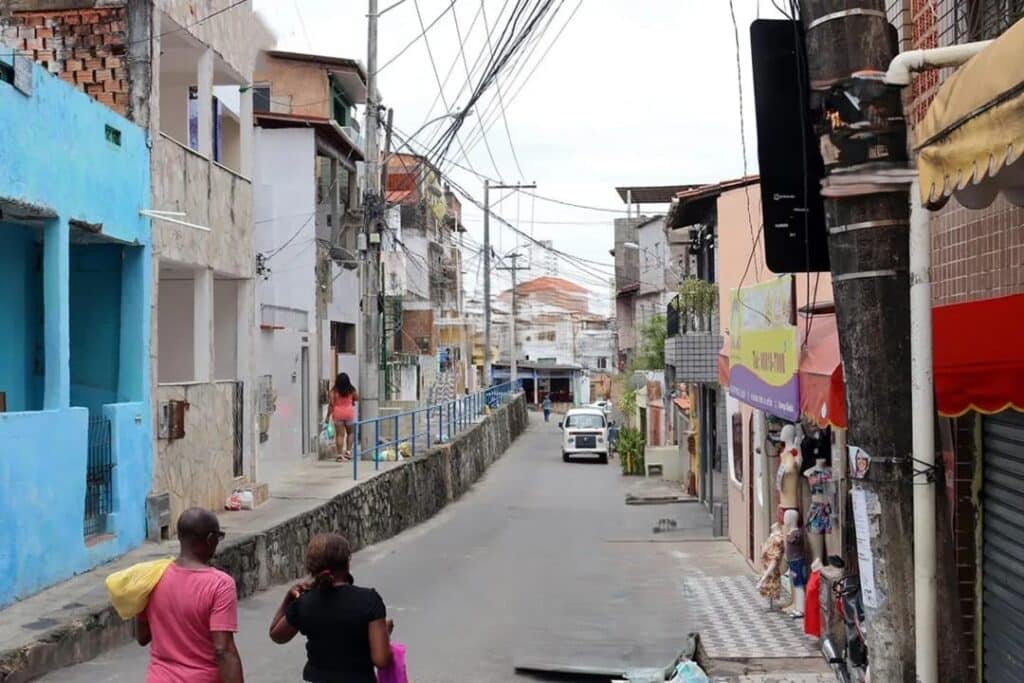
Street scenes of Engenho Velho de Brotas, Salvador