Colombian rescue changes to recovery in Peace Corps’ first tragedy
Byron Hopewell
Colombia 1961-1963
On Easter Sunday, 1962, an Avispa commercial flight from the Pacific coast resort town of Bahia Solano disappeared in the Sierra del Baudo mountains before reaching Quibdo, the provincial capital of the Departamento de Choco. Missing were four crew and 32 passengers including a hospital director, Pan American Highway and Colombia Health Department employees, three government agents, paymasters for Catholic Charities and other NGOs, many families with children, and two Peace Corps volunteers returning to their work sites from a short holiday.
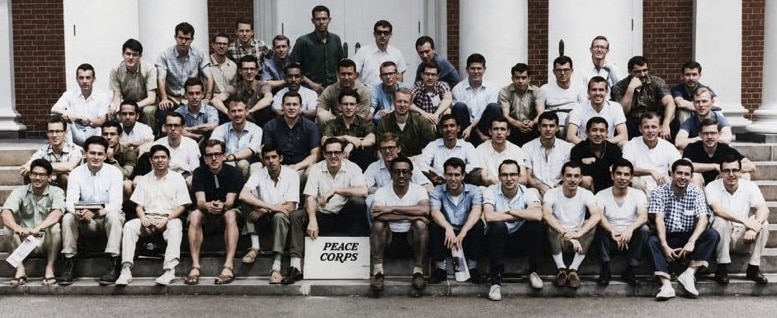
The Peace Corps volunteers were David Crozier from West Plains, Missouri, and Larry Radley from Chicago, Illinois. Both were in the group assigned to Antioquia, and I was the Peace Corps leader for that group. We were part of the 62-man Colombia I group of Peace Corps volunteers who less than a year before completed community development training at Rutgers University, shook hands with President John Kennedy at the White House, and flew off to Colombia. When he learned of the crash, President Kennedy ordered Army and Air Force personnel in the Canal Zone to assist in the search.
Ours was the first group of Peace Corps volunteers in Latin America and I was the volunteer leader working out of the CARE office in Medellin to facilitate the work of twelve other volunteers in Antioquia province. CARE oversaw the work of Peace Corps in Colombia. The following is extracted from my journal from those fateful days of Semana Santa (Holy Week).
Monday, April 23
Confusion prevails. The Medellin daily publishes inaccurate flight list. Who was on the plane? Who was not? Dave and Larry listed but two other volunteers listed but had changed return flights. Larry not returned to site yet.
Tuesday, April 24
Two other Antioquia volunteers, Ned Chalker and Steve Honore, meet me at the airport with Ted Banks, Peace Corps deputy director. Tad Kobayashi, U.S. consul in Medellin, says President Kennedy ordered search reports without delay and alert of U.S. military in Canal Zone.
Wednesday, April 25
Planes flying over area: USAF Hercules C-120, four U.S. Army helicopters, Colombian Air Force (Fuerzas Armadas Colombianas), the local Civil Air Patrol (Aeronautica Civil), and other airlines in Colombia. No news.
Thursday, April 26
6 am at airport. Weather clear, visibility unlimited. 9:30 Hercules circles bay. 12:15, no sign of missing plane. Waiting almost unbearable now. 1:30, HE-556 lands with note that a campesino (local farmer) walked three days to report hearing crash.
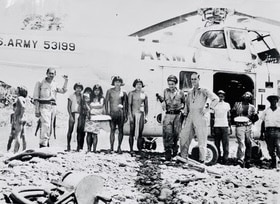
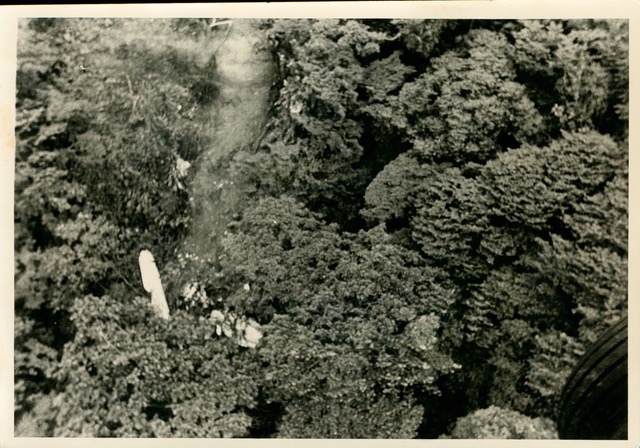
Finally, news of missing plane found on ridge of Alto del Buey, spotted by Col. John Thacker in U.S. Air Force C-47. No evidence of survivors. Confirmed by Ignacio Ossa flying Aerocivil plane. Steve and I take off with Capt. Jones in Army Sikorsky HK-19. Have good look at crash site 20 minutes later. Hoping to discover survivors, I ask Jones to lower me on cable. Sergeant at my side smiles and shakes head from side to side, mutters something. Not the first time enthusiasm got the best of better judgment. Make several passes but no sign of life. Jones lands in Quibdo, to return to ridge Friday.
Organizing search party in Quibdo with local laborers, other volunteers. Colombian military officer whose brother is missing joins us. Ned gathers ropes, machetes, axes to clear 30-meter area for approach to allow landing for helicopter. More equipment from Colombian military: acetylene torches, jacks, crowbars, hammers, machetes, knives, hacksaws, rope, bottles of milk, stretchers, medical supplies, first aid and snake bite kits, hammocks, flashlights, two dozen body bags, a Coleman lantern.
Three Peace Corps volunteers decide to join ground party search without asking Peace Corps or CARE permission. Others join in: Colombia and U.S. military, U.S. vice consul and ex-Army Ranger John Stahlmann, firemen from Medellin, Chocuano workers and a DAS agent (Colombian FBI). All have common cause. Capt. Jones surprised that two Peace Corps volunteers were on plane, gives me his .45 and Ned a .22 revolver for jaguars and snakes.
Ned, Stahlmann, the DAS agent, two Quibdo locals and two indigenous crew hike to Sierra del Baudo and scale rock face hauling cases of dynamite and chainsaws to the top of the ridge, then sleep in the rain that night.
Friday, April 27
Plans constantly change among jefes (leaders). 9:00 Thacker pushes to drop someone into site from H-19 helicopter. Everyone else agrees too risky. A copter flies Ned’s crew to the crash site on the ridge, hovering to let them off at the crash site with dynamite to clear tall trees for a helicopter’s 58-foot rotor blades. They cut, clear trees, build frame, lay strips of bamboo for helipad. At dark, they sleep in the body bags to keep warm.
Saturday, April 28
Steve and I join other searchers to reach the site in U.S. Army helicopter. A man I believe is a Colombian judge joins us to officially declare the victims deceased. We complete the helipad and search for luggage and other personal belongings. We find luggage of Dave and Larry to return to families.
Exhausted by work, surrounded by jungle heat and acrid smell of burned and rotting flesh, all feel absolutely numbed by the tragedy. Feel none of the grief for loss of Dave and Larry. I know that will come later. At this moment, I feel admiration for the pilots and civilian personnel of two countries who risked their lives, the firemen, and the Chocuano laborers who appear immune to exhaustion.
I look up at the wreckage of the fuselage and think of the cockpit’s altimeter that might indicate what had happened but then decide it would not help. We leave everything on Alto del Buey the way we found it.
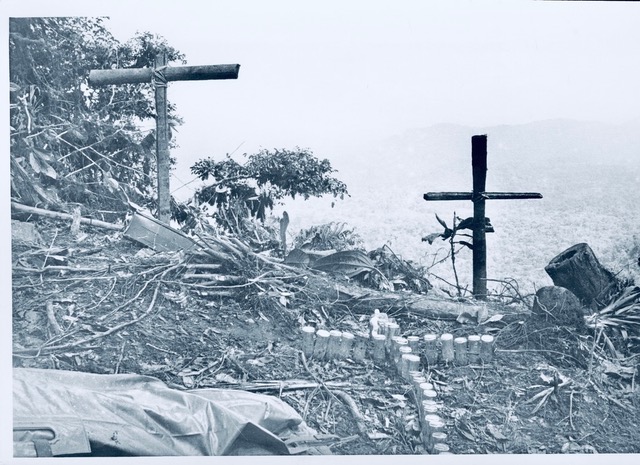
Crosses of soda bottles and tree branches were bound together and driven into the ridge’s rock and soil facing west to the river. Standing on the ridge, Reverend Misael Orjuela of the Community of Clares gave absolution to the dead. The following day, more aircraft circled overhead with a Catholic priest and a Protestant minister delivering tributes, Stahlmann reading Anglican and Jewish rites while another DC-3 carried families of those who had died in the crash. Flowers were tossed from a plane’s window to bless those who remained on Alto del Buey.
These first deaths in Colombia proved that service in developing countries could be hazardous and certainly no holiday for dram dodgers, as some of President Kennedy’s early critics had charged. The search and attempt to recover their remains at great risk demonstrated the commitment and courage of three volunteers who joined the search. We are proud to have been part of the recovery effort.
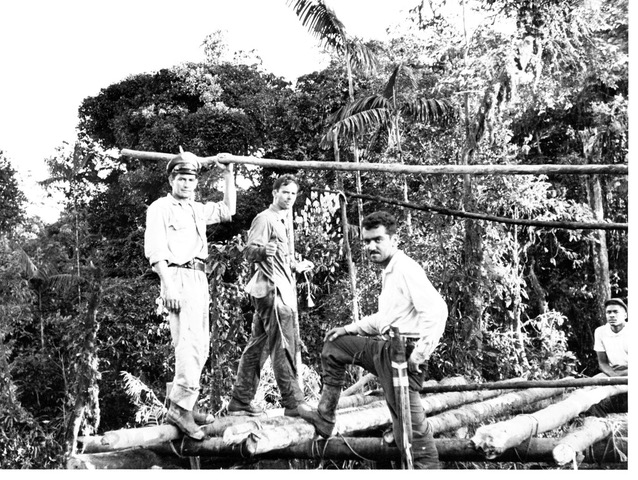
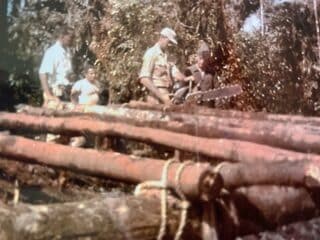
Steve Honore watched John Stahlmann cut more timbers for the helipad.