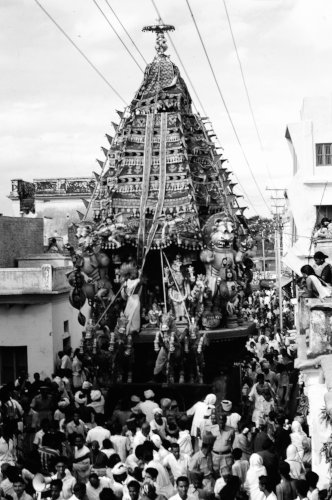
A school garden flourishes and a mentor commands from his veranda

Edward Frankel
India 1966-1968
As a child I watched my grandfather—an immigrant and a skilled carpenter—hard at work and as a result I developed an affinity for tools and an appreciation for basic technology. I learned how people used their hands and respected the skills they developed in their efforts to succeed.
At 21 years of age I recalled those childhood lessons during more than 20 hours riding a bus through southern Andhra Pradesh to my Peace Corps assignment. I saw water wheels turned by oxen, water carried miles in brass pots on young girls’ heads, and women winnowing rice using a pan and a broom. Memories came alive again of biblical stories and drawings in my childhood books.
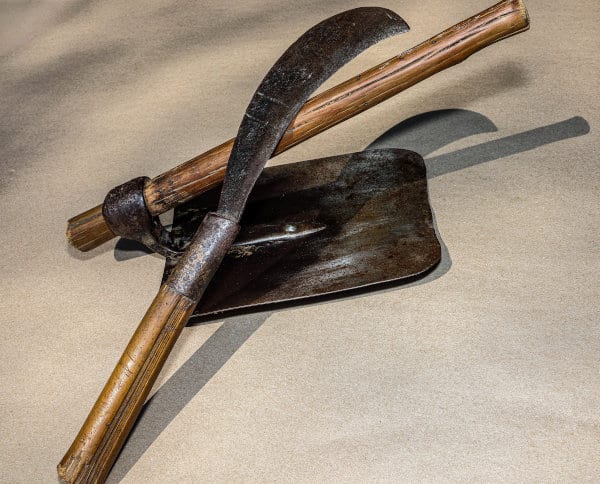
With three months of Peace Corps training in poultry and vegetable cultivation under my belt I was bound for Tiruchanoor, a small town proud of its special religious distinction as a most auspicious destination for weddings. Life there centered around the major temple for Padmavati. Cultivated land surrounded this pilgrimage center but agricultural production was secondary to the town’s economy and its multiple temples and wedding emporiums.
I settled into a vacant room in the small home of two brothers and their father, who was paralyzed. The oldest brother was divorced and cared for two children, five and eight years old. Others in the house included a disabled adolescent nephew and a household servant. The family was of high caste, but they fell below the level of their Brahmin neighbors.
My language training was in Telegu, but Tiruchanoor’s language was Tamil. Fortunately, Ramanjum, the younger brother, helped translate for me during my cultivation projects.
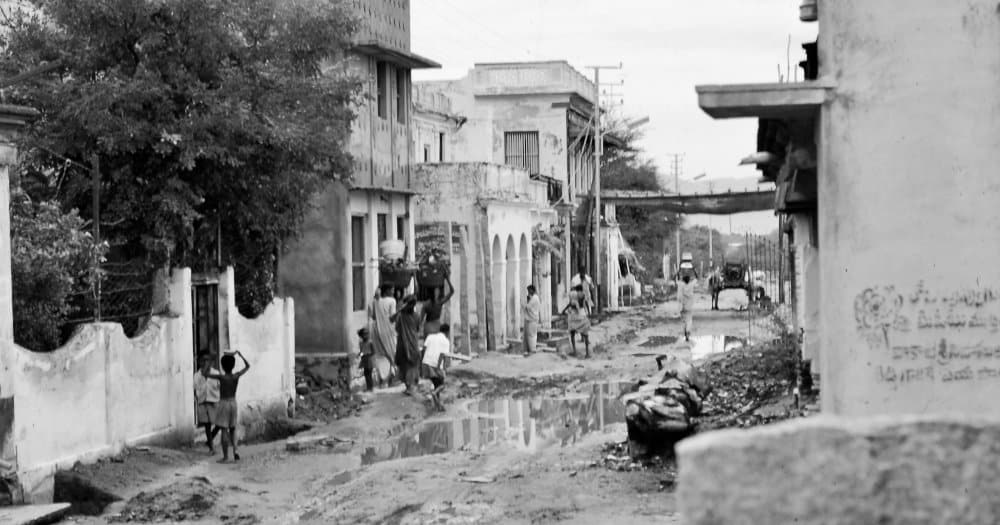
Why should an American want a parra and a cuttie?
Ramanjum never really handled the simple tools of cultivation. His caste and position, even on a largely unprofitable farm, prohibited his use of the hand-made tools essential to Indian agriculture.
He had difficulty understanding my desire to plant and irrigate the school garden. It was important for me to use the tools that represented the grueling nature of everyday existence for the working class in the developing world. The parra and cuttie served as agricultural necessities but also shaped the wood for framing the school kitchen and shoveled the mortar for the building.
The curved blade of the cuttie broke India’s dry, caked soil and harvested squash and coconuts. The short-handled shovel, or parra moved tons of mud to open and close irrigation ditches to Asia’s rice fields.. I felt fortunate to engage with these rudimentary technologies that offered age-old solutions to life’s challenges.
A most beautiful and powerful man
My Peace Corps assignment was to supervise cultivation of a one-acre vegetable garden to supplement a CARE lunch program of cereals for a school just four doors from our house. The garden was established in a dry riverbed. UNICEF dug a well and built a fence around the garden and in preparation for the Padmavati Festival we collected tons of seaweed from the temple’s tank and plowed into our river sand.
Before our first harvest the Peace Corps office in Hyderabad suggested I initiate a community project to build a kitchen for the school’s hot lunch program. The village president laid the job squarely on my shoulders and said the “honor” of the village lay in my hands. I felt totally overwhelmed.
Fortunately for me, I had a close friend and neighbor whose name was Kittapa. He was born with two club feet and could only get around in his own house with great difficulty. In spite of his disability Kittapa was the village’s wise man, a most respected citizen and an unofficial judge who was respected in the local courts. He became my guide and mentor and I considered him to be a most beautiful and powerful man.
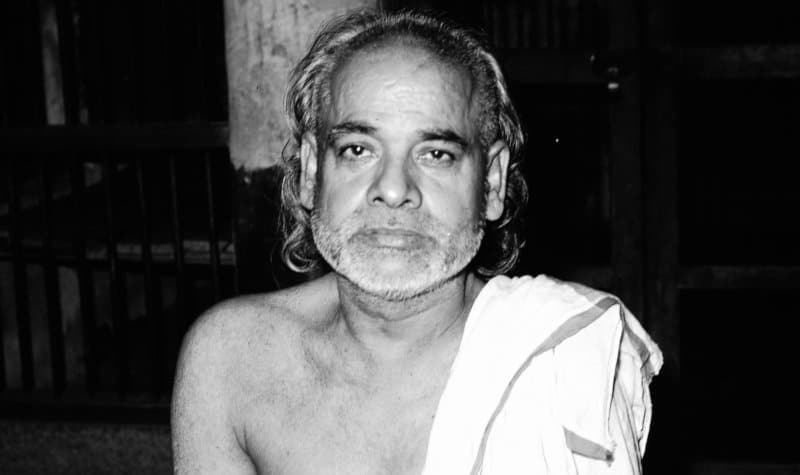
Sensing my bind, Kittapa was eager to help. From his chair on his veranda he commanded the building of the school’s kitchen from the procurement of the bricks to the construction of the roof.
Weeks before I finished my projects and prepared to leave India, I began asking Ramanjum to go to the market with me and have a new set of tools made that I could take home. He still clung to the notion that these tools were below an American’s station, so he procrastinated until it was too late.
One day as he watched me pack my footlocker with my portable typewriter, some hand-carved dolls, and my sparkling white cotton dhoti and juba, (which he knew I wouldn’t be wearing back in the states) he relented and handed me the well-worn implements from his own fields. In return, I gave him rupees to buy replacements and we rode the rickshaw to the bus depot in a neighboring town for my departure.