I was sluggishly adapting to my first winter in Onyang town.
I arrived in Korea in summer 1974 as a Peace Corps volunteer. After an intensive three-month training in Korean language, culture, and English teaching methodology, I headed west to my Peace Corps site where I would live for the next two years.
The arrival of winter was a shock: I hadn’t experienced a Manchurian cold front before, and my room’s only heating sources were charcoal cylinders that heated the flues under the flooring.
Although I taught many English classes at a boy’s middle school, I organized a “special English class”, selecting four of the brightest students. Twice a week, at 6:30 a.m., I’d pile on layers of clothing to limit exposure to the freezing temperatures, fold my floor mattress and spread out my quilt so my students and I could plunge our legs into the warm refuge. I could then welcome them to my room and begin our hour-long lesson, which usually took the form of open conversation.
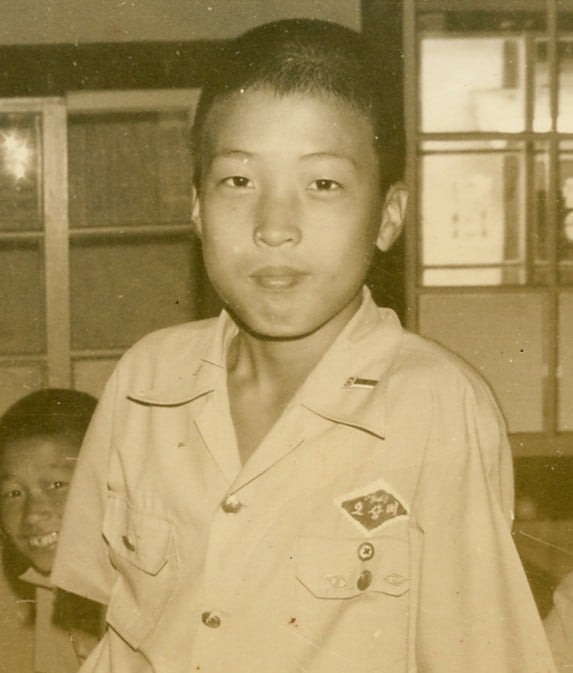
One of the four students was a real standout: During a lesson, we discussed our relatives’ names. When I mentioned my father’s name, Severance, three of the students whispered among themselves, then proclaimed “Strange Name!” But one student who hadn’t joined in the “strange name” medley, suddenly said, with great confidence: BRAVE NAME!
After a brief discussion regarding the meaning of “brave”, they all chortled back, “Yes, it is a BRAVE NAME!”
We all laughed with some relief, my father’s name having recovered its respected standing.
That student’s tactful (dare I say “brave”?) response left a strong impression on me: He quietly, but decisively, expressed an opinion that opposed that of his classmates. Perhaps he also intuited the importance of showing respect for an elder’s name.
I saw him often during that year, as he was the class leader. He appeared frequently in the teachers’ room, passing or delivering messages. And, of course, he continued to consistently show up for my “special English class” in the early morning.
He moved on to a high school during my second year of teaching in Korea, and I lost touch with him. But I remembered his name: Sang-Bae.
After completing graduate school in 1978, I worked overseas for the next 30 years for various non-governmental organizations. I returned to Korea several times to re-connect with friends and my Korean family whom I lived with during my Peace Corps days. I still thought of Sang-Bae every time, but had no idea how to initiate the search for him — I was not yet knowledgeable of Google Search capabilities.
In 2006, I returned to the US and worked for the American Red Cross. Two years later, The Korea Foundation and the Friends of Korea organized the first “Korea Revisit” program: former volunteers were invited to return to Korea. The program activities included visits to attractions in Seoul and briefings at the Ministry of Education or Health – but the real highlight of the revisit was when each volunteer returned to the town where they had worked so many years before to reconnect with their colleagues. Since 2009, about 450 volunteers have returned through this annual revisit program.
I signed up for the autumn 2009 revisit. I filled in the names of people I wanted to see during my site visit. One of the names I mentioned was Sang-Bae, convinced that locating him would be a long shot. But I held a scintilla of optimism that somehow, the revisit organizers might track him down.
I hadn’t heard from the organizers when I left for Seoul, so concluded that the Sang-Bae search was unsuccessful.
During the first three days of the revisit, the other former volunteers and I had a fast-paced, stimulating stay in Seoul before we left for our respective Peace Corps sites with a Korea Foundation-provided driver and translator. As we arrived in Onyang, I was relieved that I was with my two escorts as I barely recognized my old town – so many of the familiar landmarks from 30 years ago were gone.
The next day, we drove to the modern iteration of Onyang Middle School: the 1930’s vintage, all-wooden building where I had taught 34 years before had been torn down. I got out of the car and saw one middle-aged and two older men waiting for me in front of the school, holding bouquets of flowers. I was able to identify my co-teacher, as well as another English teacher whom I occasionally taught with. But I was stunned when I saw…Sang-Bae! I instantly recognized him: even in his middle school days, his relatively tall height stood out. Tears came out of my eyes, as I was overwhelmed by the emotion of the moment.
Over the next couple of days, I caught up with my co-teacher and the family I had lived with in Onyang. But there was something that clicked when Sang-Bae and I met a few times during the two-day visit. He had an infectious sense of humor and emanated the sense of dynamism that I had detected so many years before. I instinctively knew that we would continue to meet whenever we could cross paths.
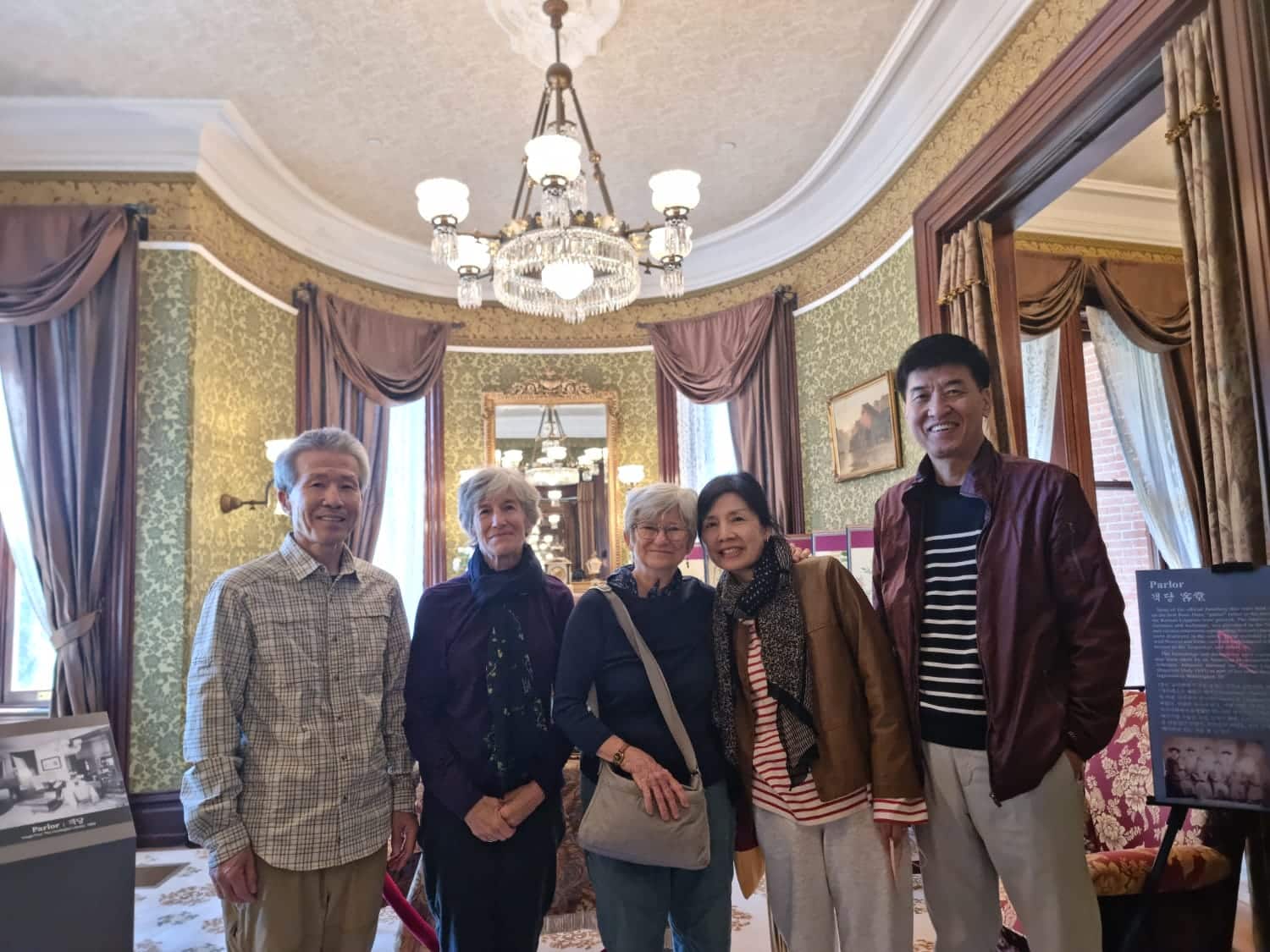
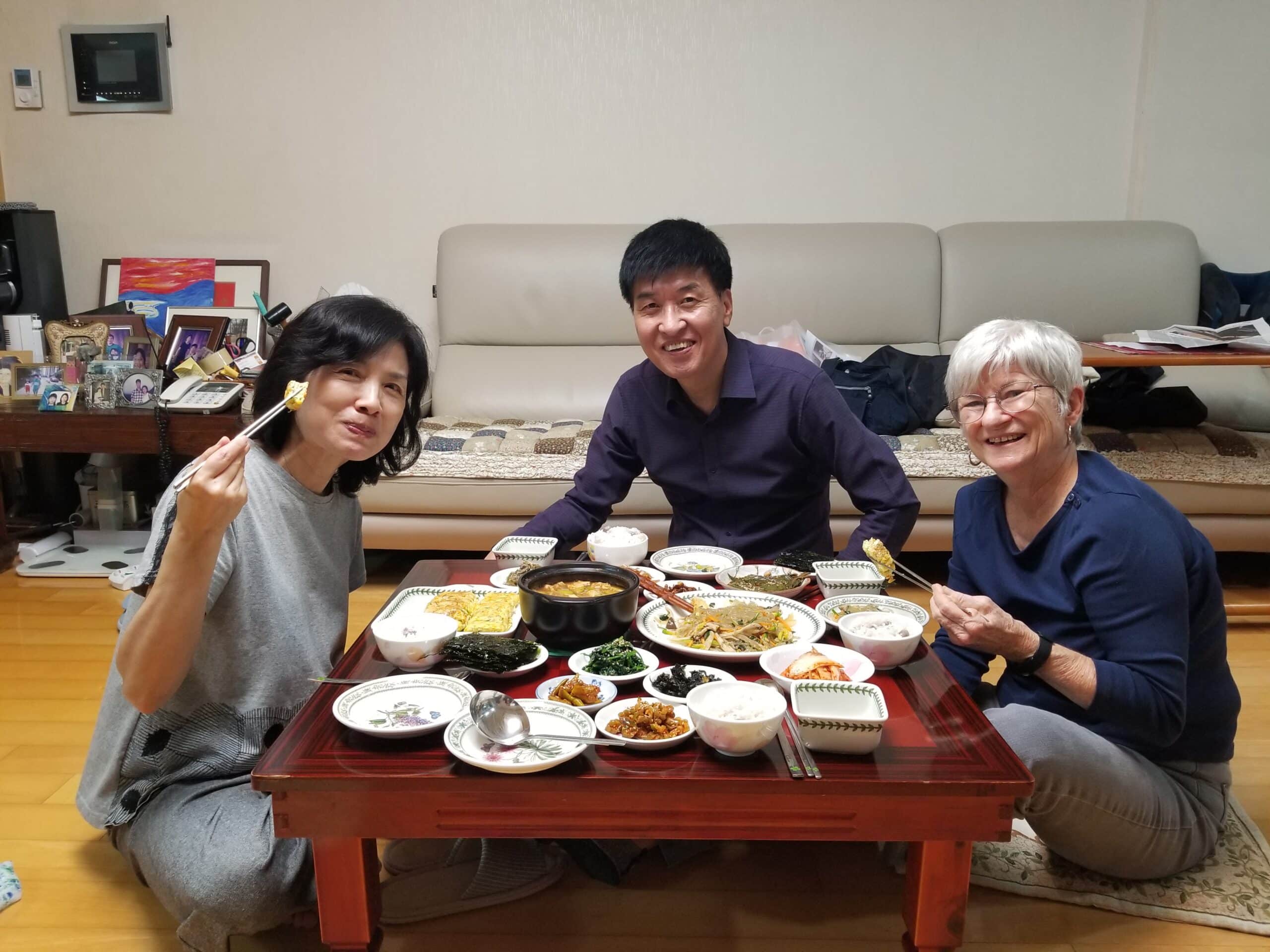
And indeed, that’s exactly what’s happened since that reunion 16 years ago. My work-related travels sometimes took me to Vietnam and Indonesia, so I was able to transit through Seoul on some of the trips and get together with Sang-Bae, his wife and two grown children for meals and long walks. And I was also able to host Sang-Bae and his delightful wife at my home in Washington D.C. in October 2023. We visited the sights that D.C. residents tend see only when we host out-of-town friends: the Capitol, Mount Vernon, the Korean Legation, and other venues, coupled with Korean cuisine, laughs, and endless coffee.
And I was back in Seoul a mere two weeks later for a long-planned trip. We continued the conversation string, as it was still fresh in our memory. More delicious meals, fascinating discussions, and hiking in mountains north of Seoul.
One student, one teacher: meeting again after 34 years. And continuing to connect more than 50 years after those special English classes in my freezing room in Onyang, where that student proclaimed that my father had a “brave name.”
Christy Gavitt was a Peace Corps/Korea volunteer (K-32) assigned to Onyang Boys’ Middle School in Onyang (now Asan), South Chungcheong Province, from September 1974 until June 1976 where she taught English. She returned to Korea as a water and sanitation education evaluator with CARE in 1978-79, and then managed emergency and development projects in 13 countries for over 30 years. Christy is currently a global health consultant.