I joined the Peace Corps two years after my husband’s death. I was in my early 40s, which may have seemed old to most of the volunteers, but not so much now I’ll bet. Since I was a child, I had always been attracted by the Peace Corps, and having traveled and done volunteer work with my husband on our own, it seemed the right time to join.
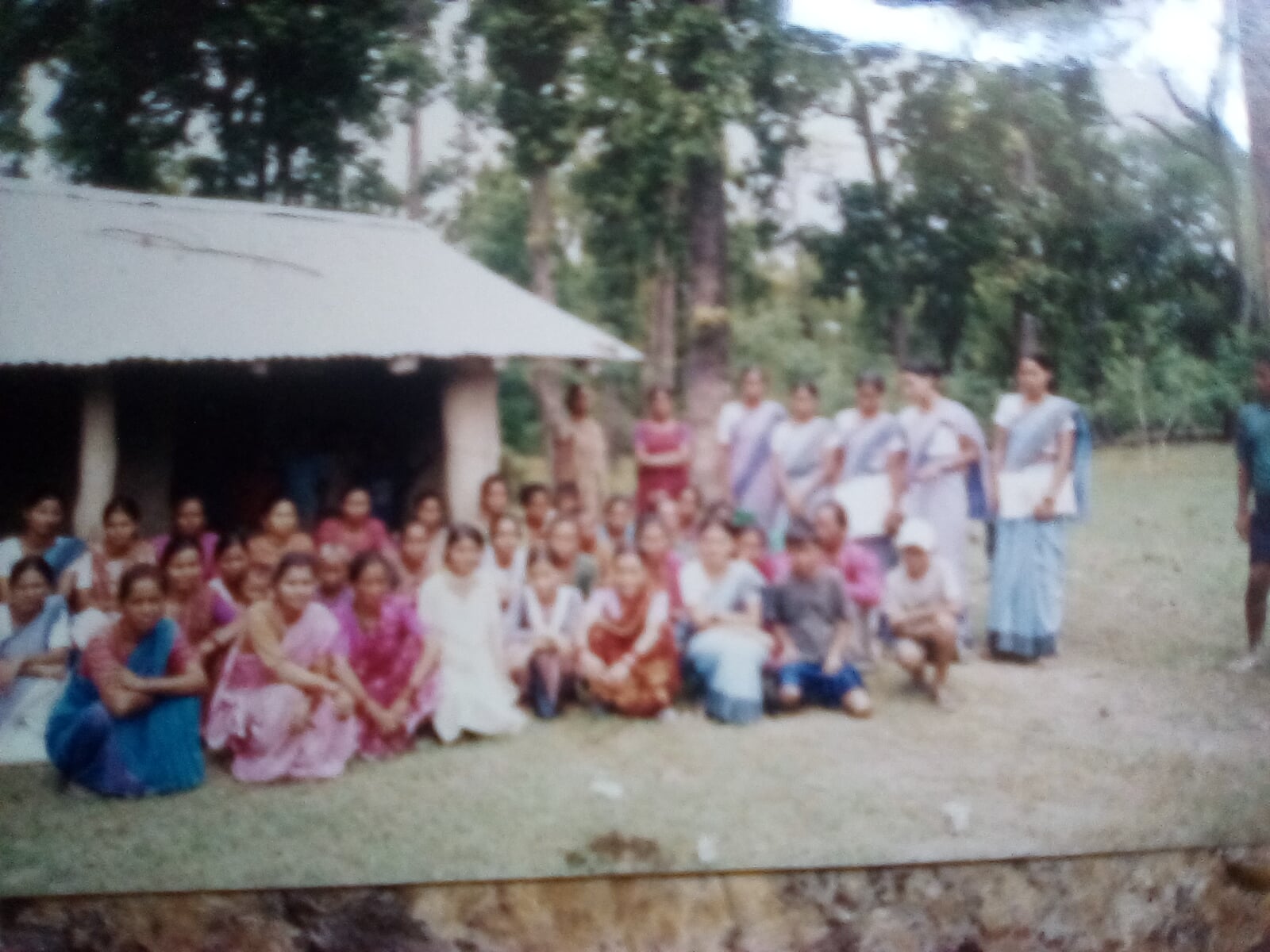
I was assigned to Nepal, a surprise, to teach auxiliary nurse midwives, also a surprise since I had a background in psych nursing, not midwifery. I was assigned to far west Nepal on the border with India, a fairly underdeveloped area where elephants, tigers, and monkeys lived as in Kipling’s Jungle Book. The Palace Massacre of the royal family had just occurred, and the incipient Maoist Insurgency led to an influx of children from the northern hills to the relative safety of Dhanghadi where I taught. I taught budding nurses, then walked miles to a local elementary school to teach English.
The ethnic mix in this area are various subgroups of the Tharu people. Each subclan has its own language and customs. I was told that the Tharu women came to this dense jungle area with their male servants, for protection, when North India was taken over by the Mughals. The idea was that they would return to India someday, but they never did.
During my first months I lived in the town center and later I moved into the jungle area to live with a Chaudary Tharu family. The Ranu Tharu people lived further into the jungle. I spent most of my leisure time visiting with these two subgroups.
As I walked, I encountered many soldiers, who harassed the Tharu because they incorrectly believed that they were Maoist supporters. My walking and introducing myself helped diffuse the situation. Not only could the military not believe that a ‘white woman’ was living in the area, but many had never encountered such an odd being.
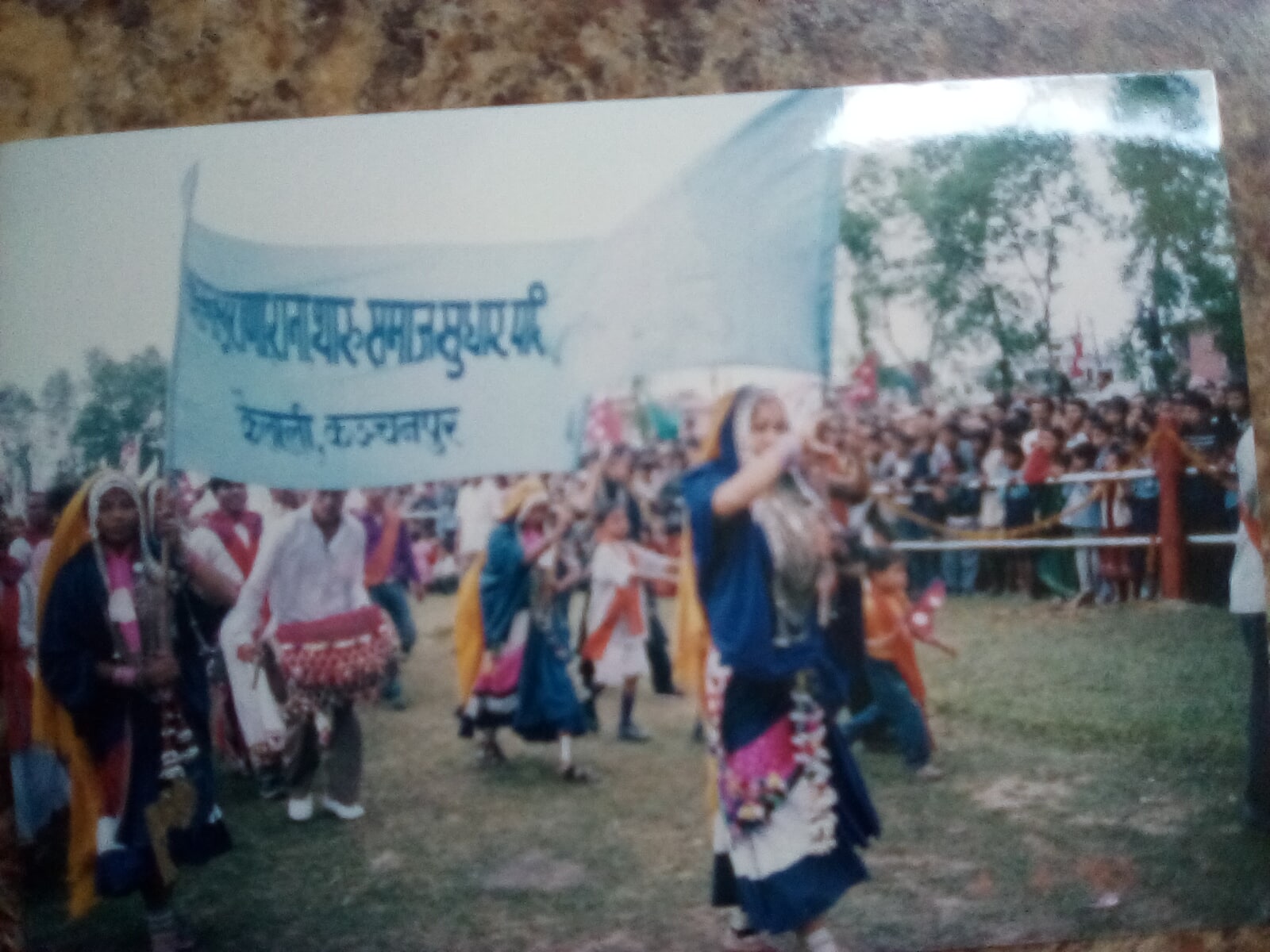
Living in this area was a bit rough, but I quickly became part to the community partly due to my work, but also, I think, because I chose to live in this area. I was always part of weddings and religious days, all types of celebrations, and just normal days chatting on the rooftops or planting rice.
The Tharu women are very proud and were not subservient to the males in their family. For example, in the area at the time, it was not uncommon for women to eat only after all males were fed. Not so with Tharu women. Sitting on the floor eating. they would push their husbands’ plates of food to them with their feet just to remind them that they were not superior, I was told.
The Chaudary Tharu headdresses I donated are from wedding ceremonies and made of shells which in a land locked country, speak of a forgotten tradition. The Rana Tharu outfit I donated may look ceremonial, but it was everyday wear for these women. From young adult to ancient grandmother, it was what they wore to tend crops, animals, and carry bricks to help construct houses. The bare stomach and back of the outfit, and shorter skirt, somewhat scandalized the more conservative dress of Hindus and Muslims.
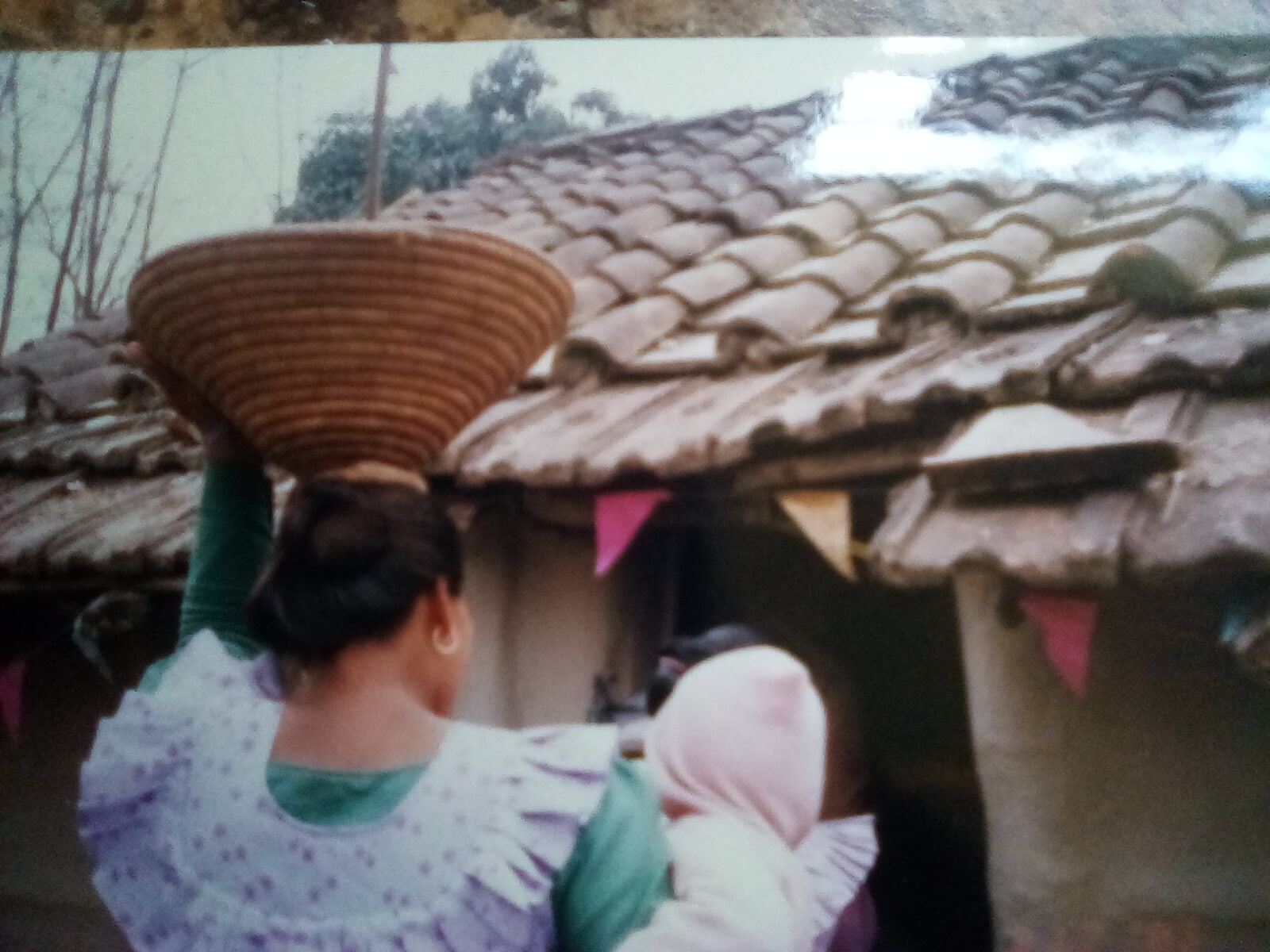
I remember walking down to main road to my work area, and passing Rana Tharu women with baskets on their heads selling vegetables door to door. We would check each other out. I thought how elegant, a vision from another time. They thought, I was told, ‘she’s so fair, and those blue eyes”.
Although it was in some ways a more dangerous and less comfortable living experience– not to mention the miles of walking– I would never change my decision to serve in Nepal. The people of Dhanghadi were and still are the most gracious, caring people I have ever met. These objects are reminders for me of an incredible experience. I have taught and lived in many countries since, but nowhere comes close to Nepal.
Watching the recent Gen Z revolution, I wonder how many of the old traditions are still being kept. When I was there, I had a simple camera, the only one in the area; and there was one ‘internet cafe’. It seems that today everyone has a smart phone and I’m sure is savvier than me in using the internet.