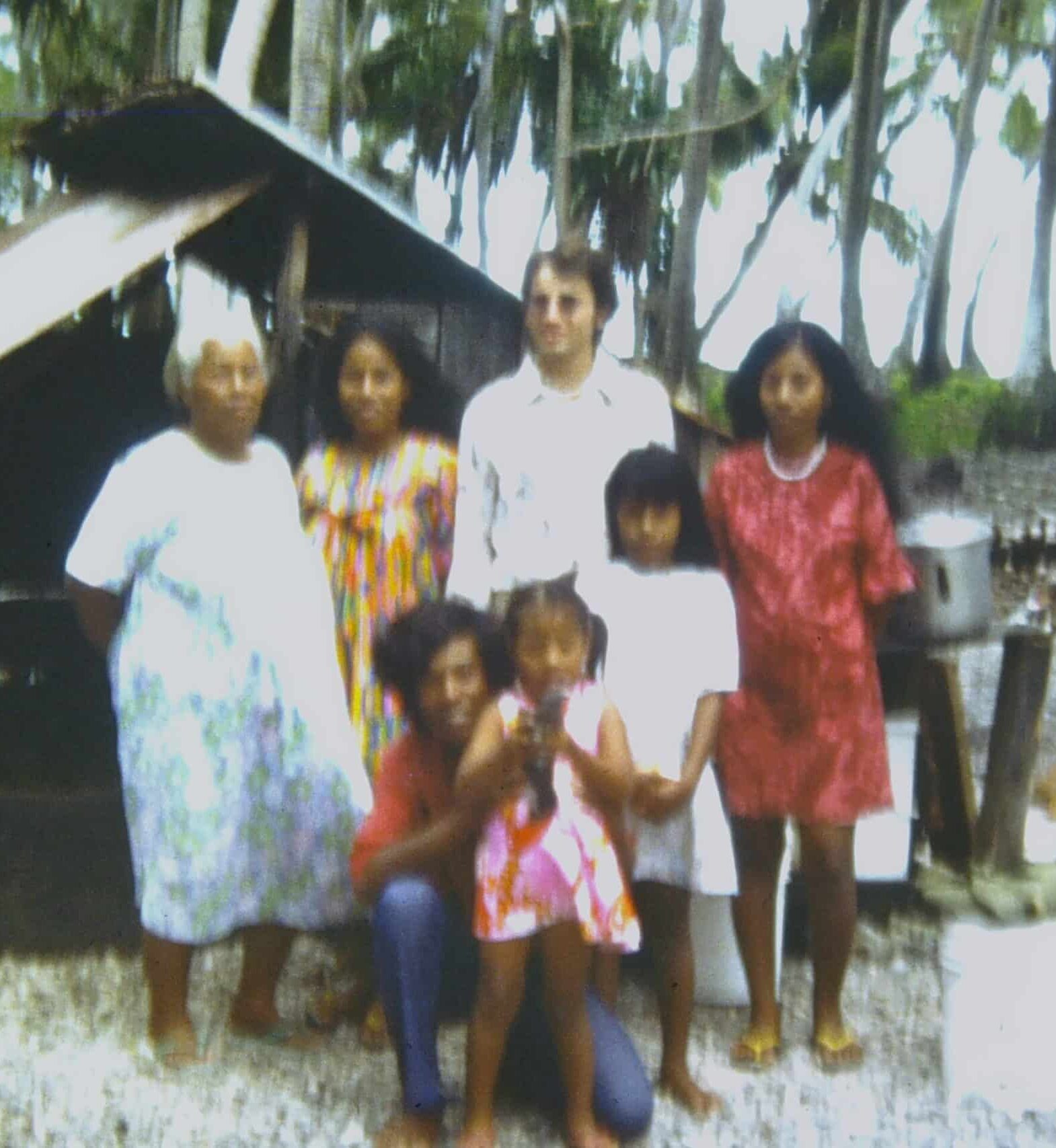
In 1975, I volunteered for the Peace Corps in the Marshall Islands as a math and science co-teacher. My pre-service training was on Arno Island, the most populous island in Arno Atoll, with 300 people. The island is a three-mile-long strip of land about 1.5 meters above sea level, with open ocean on one side and a lagoon on the other. I stayed with a host family: my grandmother, her daughter, her granddaughter, and a couple of male relatives. I learned Marshallese and gained an understanding of the culture. I practiced speaking Marshallese with my host family, ate meals with them, and slept on a mat on the cement floor of their small house.
After completing two months of training, I began my work assignment on Lib Island, a single, low-lying island approximately 0.4 square miles in area, surrounded by open ocean, with a population of 125 people. The U.S. military had relocated Lib people to another island from 1961 to 1966 while conducting missile tests in nearby Kwajalein Atoll. To compensate the Marshallese for their displacement, the U.S. military built 24 plywood houses for the families. I worked in a primary school with 45 students and two other teachers. The climate was tropical, with the temperature staying between 76-90 degrees F. every day, with trade winds from the northeast, and with rainy and dry seasons. Communications were extremely limited, mostly by mail. A government field trip ship visited every two to three months to buy copra, sell staple goods from the ship’s store, and deliver and collect mail.
I lived alone in a plywood house, but the community also cared for me. My neighbor taught me to fish and shared his fish with me. Since there was no electricity or refrigeration, we had to eat fish and other food within several hours after cooking. My Marshallese ability improved. I learned to live on an island and fish in the ocean. I once caught a 45-pound red snapper, which we shared with everyone on the island.
After two years, I extended my service for one year to work on a project to improve coconut horticultural practices. In 1978, I returned to Arno Island to work with the island council, staying in the same house with my original host family. My Marshallese grandmother, Juena, was good-natured and kind, spending her days cooking and working on handicrafts. All young Marshallese girls learn to juggle two stones with one hand while walking down the road. One day, I asked Juena if she could still juggle stones after 50 years of not doing it. She tried and was still able to do it, giggling like a young girl again.
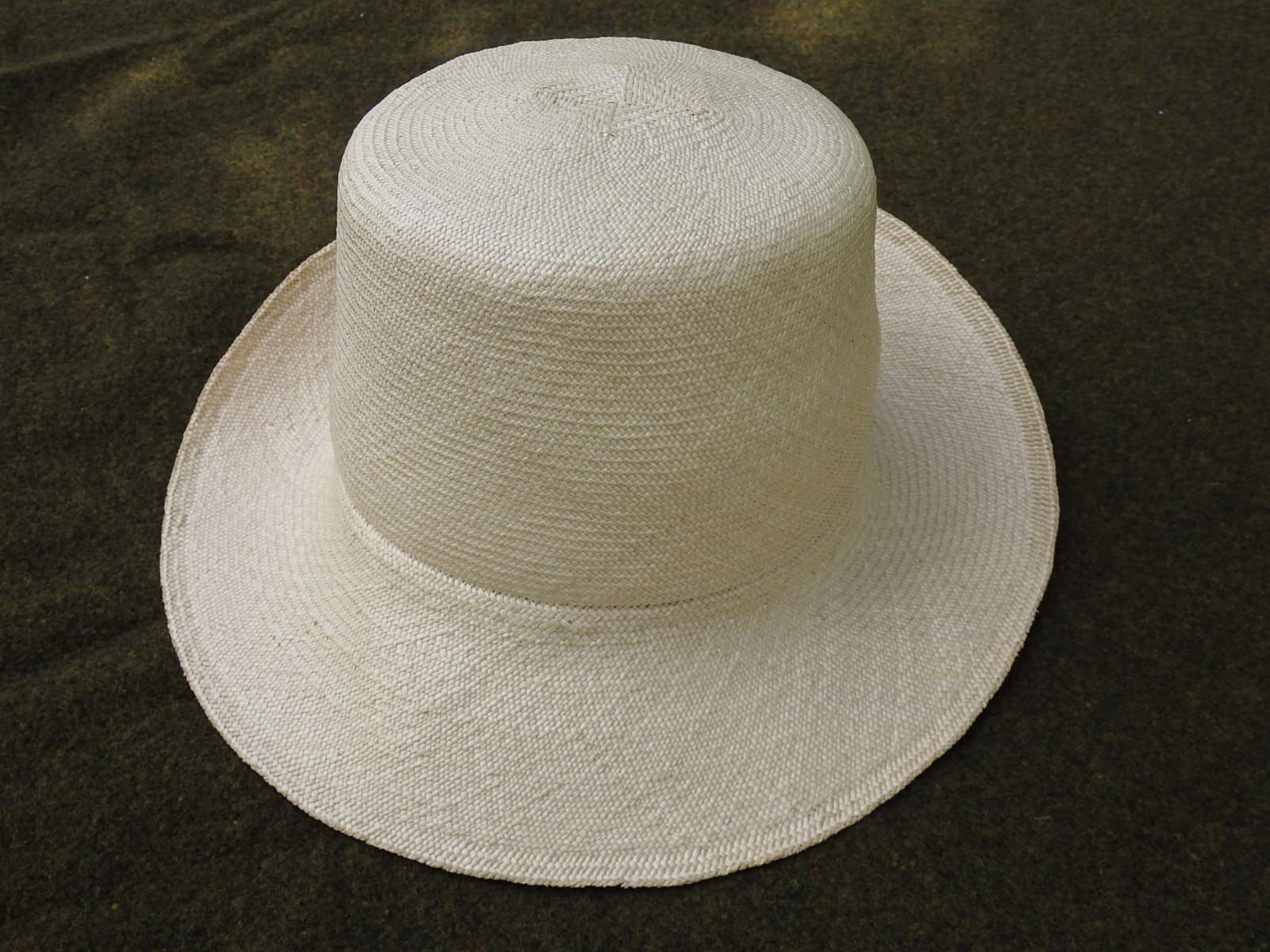
I saw Juena weaving a hat from the outer fiber of the midribs of young coconut leaflets. She boiled the leaflets to make them soft enough to strip the thin fiber from the midribs. The fiber curled when dry, turning ivory white. Juena wove her hats using an oblong cylindrical wooden head block. The weave was fine because the fiber was thin, allowing her to weave with a high number of diamonds per square inch. If you look inside these hats toward bright light, you can judge the fineness of the weave by the number of diamonds per square inch and by the consistency of the weave, lines, and spaces. Juena’s hats were locally fashionable on Arno Island. She wore her hats every Sunday at church.
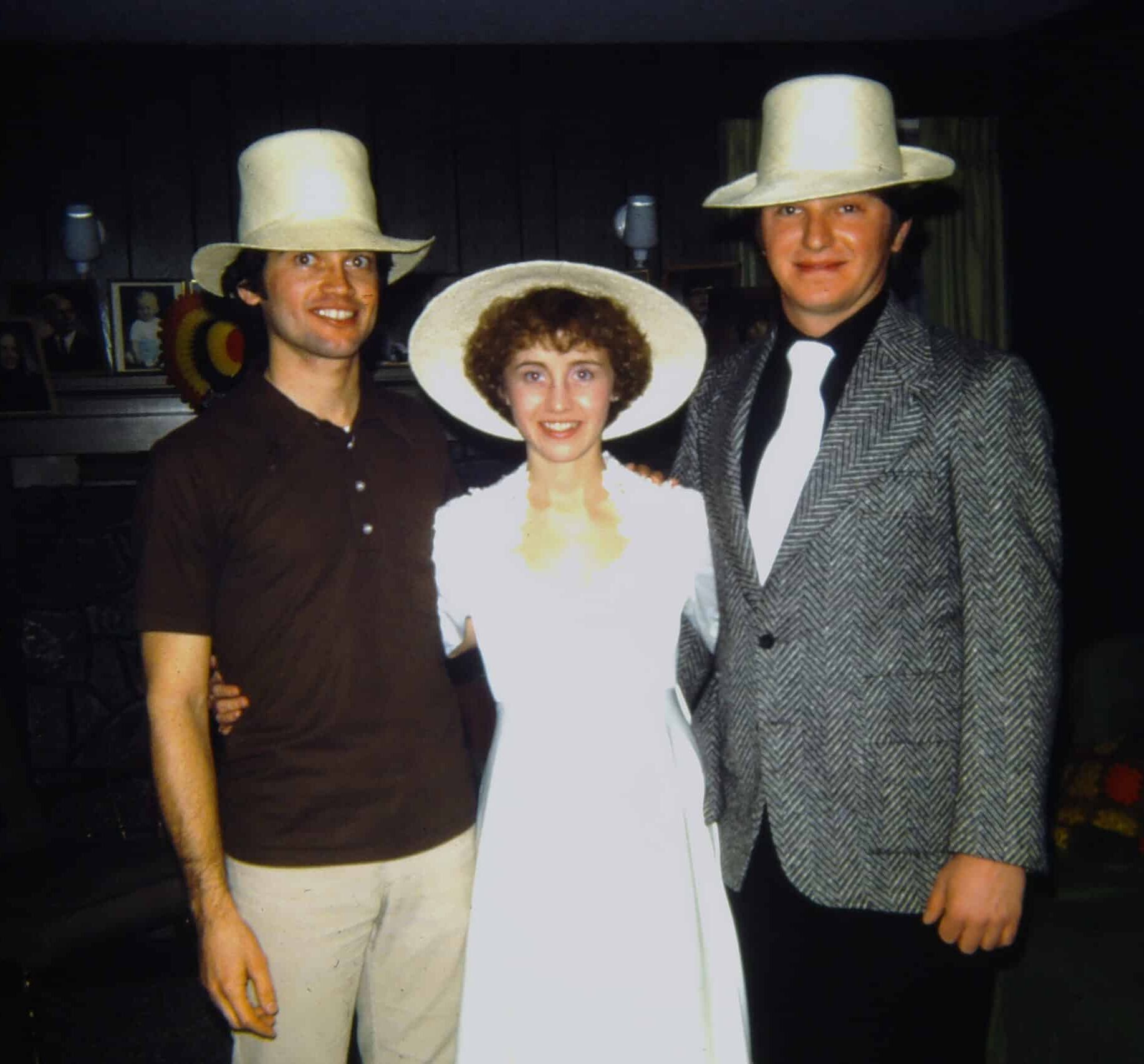
I asked Juena if she could make hats for my younger sister in Wisconsin to wear at her wedding later in 1978. Juena agreed, and when I asked if she could make a rounded head shape for my sister’s hat, she used an inverted bowl as a head block. Though she had never done this before, she was able to modify her technique to weave it expertly. She spent several months weaving the hats, a laborious, lengthy process.
I photographed my sister at her wedding wearing the hats and sent the photos to Juena. Though I never met Juena again after early 1978, I imagined that she would have been proud to see the photos. Except for wearing these hats once for photos, they are pristine.
In 2024, I revisited the Marshall Islands. I did not find any coconut fiber hats in the handicraft shop in Majuro, nor did I see any women wearing the hats on Arno Island.
Though Juena’s skill in weaving hats was impressive, the art of weaving coconut fiber hats is fading into history with the passing of older Marshallese hat weavers. That makes these hats precious.